
What To Know About HVAC Duct Repair
How do you know if you need HVAC duct repair in your home? Do some rooms in your Omaha home never get enough airflow while others feel like you’re in a wind storm? Your furnace or air conditioner isn’t necessarily to blame. Your ductwork may need repairs.
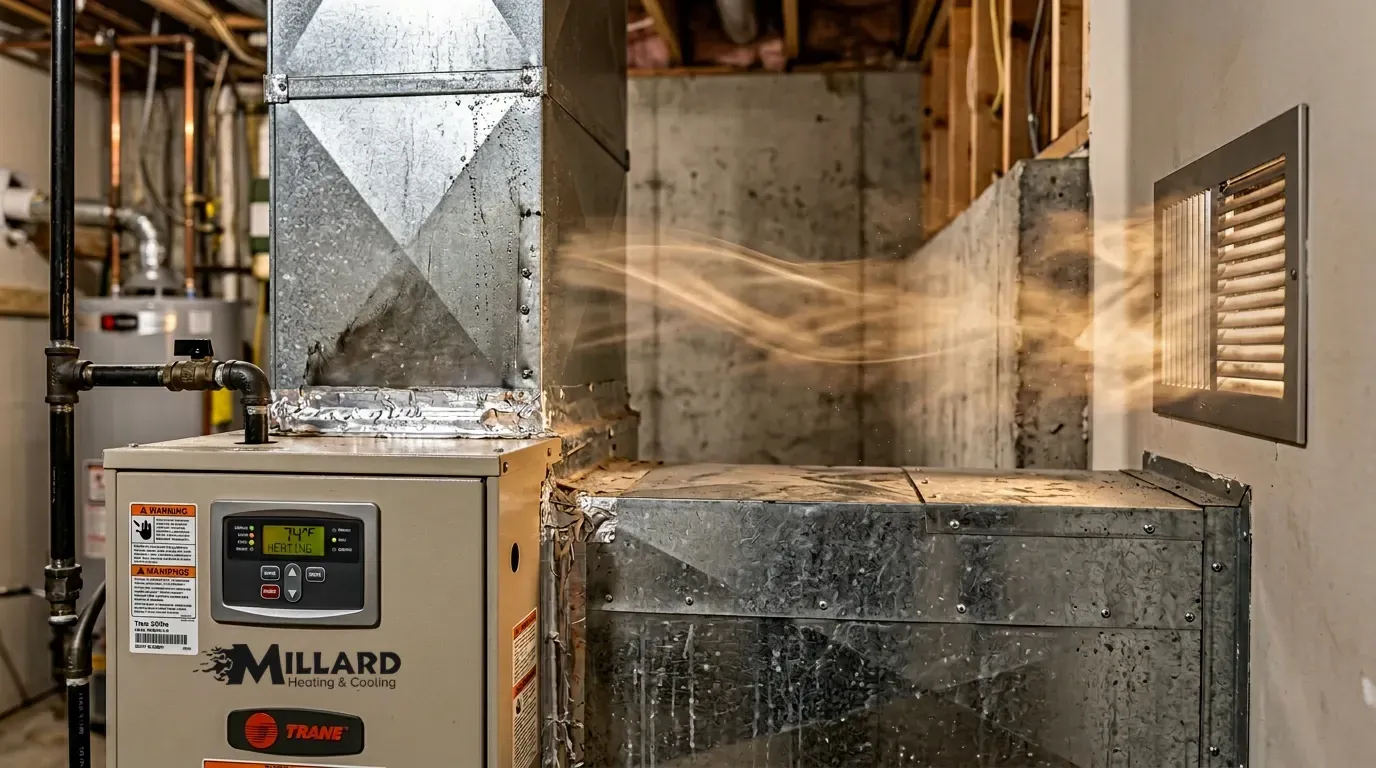
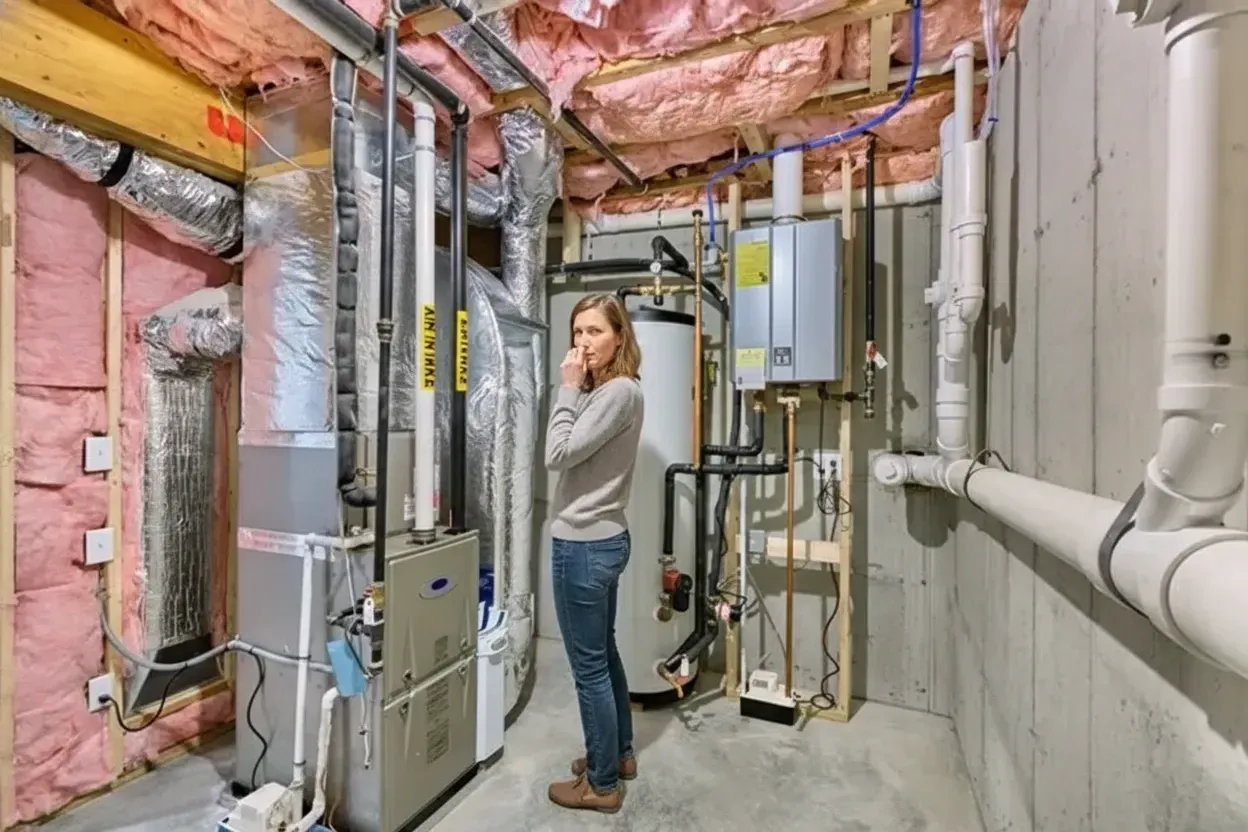
Your home’s main HVAC system, typically located in the basement or garage, plays a central role in maintaining a comfortable indoor temperature. The thermostat is the brain that tells the system when to run and for how long. Your HVAC system controls the air’s temperature and humidity, while the ductwork distributes it throughout your home. Even properly conditioned air cannot keep your home comfortable if the ductwork fails to deliver it to the right rooms.
We’ve helped homeowners throughout Douglas, Sarpy, Cass, Washington, and Saunders counties resolve uneven temperatures in their homes. Most of their rooms felt comfortable, but one of their rooms felt too cold or too warm. Those are all circulation issues.
Do you want to spot or find out if you need HVAC duct repair? Us too! We’ll cover what HVAC duct repair is, common problems we see, signs to look for, what causes duct damage, and more.
What Exactly Is HVAC Duct Repair?
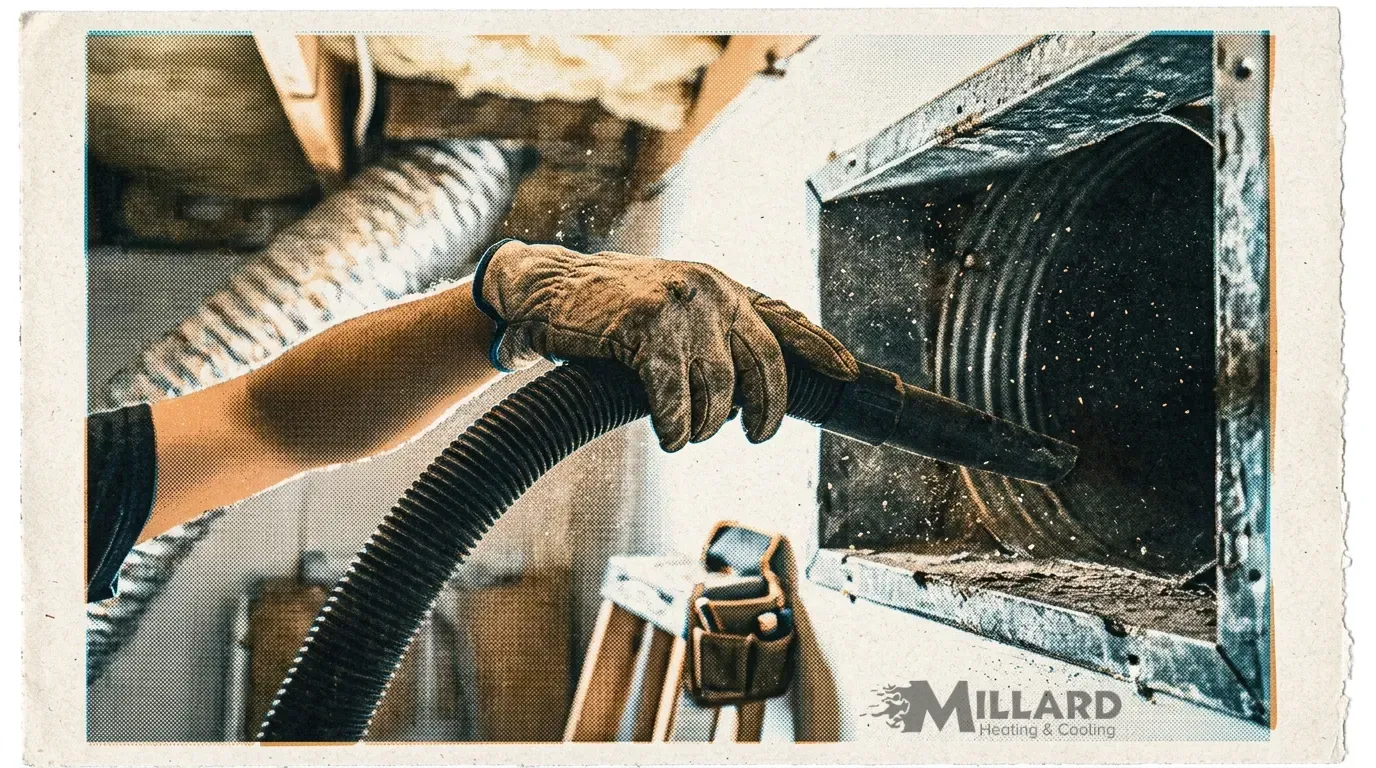
Simply put, ducts carry air to and from the main HVAC system. These passageways must remain properly sealed between the HVAC unit and the supply and return registers. HVAC duct repair may involve sealing leaks, reconnecting separated sections, patching holes, replacing damaged duct runs, securing loose or damaged supports, and correcting other problems that restrict airflow.
Just like every home in Omaha is different, each repair we do is different, so how we do your HVAC duct repair depends on what’s wrong with it. Think of going to a doctor. We can’t prescribe anything until we examine the issues, diagnose the problem, and prescribe a solution.
To prevent any confusion when our HVAC technicians come to your home, there are a few terms for you to know so that you know what our technicians are saying:
- Duct repair fixes physical damage to the ductwork, such as holes, leaks, loose connections, or separated sections.
- Duct sealing closes hidden gaps around joints and seams to prevent air leaks.
- Duct replacement involves removing damaged or outdated ductwork and installing new sections. Replacement may be more practical when the damage is extensive, or repairs would cost too much.
- Duct cleaning removes dust, debris, and other unwanted materials that have accumulated inside the ductwork.
- Air balancing involves adjusting dampers and registers so each room receives the right amount of heated or cooled air.
- Duct redesign changes duct sizes or layouts to improve airflow throughout the building. It may involve replacing part or all of the existing system.
Just as a doctor recommends treatment based on a diagnosis, we recommend duct repair services based on the problems we find. Your home may need one or several of these services.
Common Air Duct Problems We See on Service Calls
Like most homeowners, you may wonder which problems require HVAC duct repair and which conditions are normal. The table below explains the difference.
| What's going on | What usually causes it | How we typically fix it |
|---|---|---|
| Leak in a seam | Sealant not working | Mastic tape or UL 181-rated foil tape |
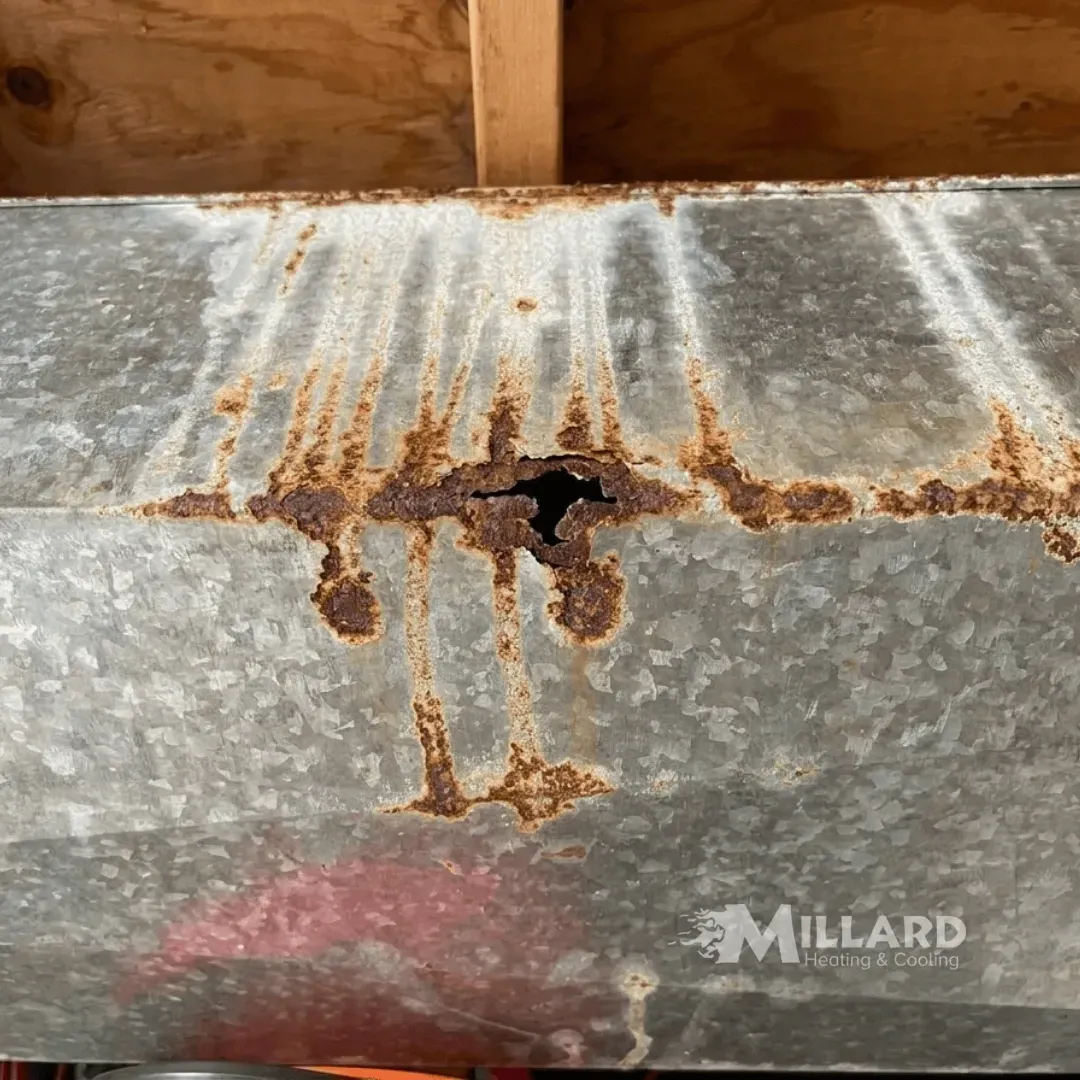
| Hole in metal duct | Impact, rust, or pests | Sheet-metal patch, screws every 4”, and sealant |
| Flexible duct rip | Pests or accidental damage | Repair or replace that section |
| Disconnected air duct | Failed fastener or poor support | Reconnect, fasten, and reseal |
| Crushed ductwork | Bad installation or something heavy pressing on it | Usually replaced |
| Sagging flex duct | Not enough support | Re-support and reroute |
| Damaged insulation | Age, moisture, or pests | Repair or replace as needed |
These are only a few of the problems that can affect your ductwork and require repair or replacement.
Signs That You've Got a Duct Problem
So, we briefly talked about a few of the signs of needing HVAC duct repair above, but how do you know you’ve got a duct problem? You know you’ve got a duct problem if your home has uneven temperatures, weak airflow, your electric or gas bills increase faster than normal, you’re getting a lot of dust at the registers, the air is more humid than normal, you actually see damage, your system runs a lot longer than usual, or you hear weird noises when your system starts. Don’t worry. We’ll explain what may cause each problem.
Uneven Temperatures
If the primary bedroom feels comfortable but the front room feels too hot or cold, your ductwork may have a problem. Your HVAC system should maintain consistent temperatures throughout your home. A room that stays uncomfortable may not receive enough conditioned air.
Weak Airflow At The Vents
Think of HVAC airflow like the breeze from a box fan. If the fan runs on high but you feel little air, something may be blocking or disrupting the airflow. Your HVAC system can experience similar problems. Blockages, leaks, or disconnected duct sections can prevent conditioned air from reaching the intended rooms.
Energy Bills Are Creeping Up
Several factors can increase your energy bills, including damaged ductwork. Leaks, blockages, or disconnected sections can prevent conditioned air from reaching the right rooms. Your HVAC system may then run longer to reach the thermostat setting, consuming more gas or electricity.
Excess Dust Around Registers
Your air filter captures dust and other particles before they circulate through your home, so replace it regularly. Excessive dust around a register may indicate a dirty filter, debris inside the ductwork, or a leak pulling in unfiltered air. Clean the register and replace the filter first. If the dust returns quickly, have an HVAC technician inspect the ductwork.
Strange Sounds
Your home may contain both flexible and rigid ductwork. Banging, tapping, or shifting sounds when the HVAC system starts may indicate loose connections, damaged supports, pressure imbalances, or expanding metal ducts. A technician can inspect the system to determine whether the noise requires repair.
Musty Smells
Nebraska’s humidity changes throughout the year. During the cooling season, your air conditioner removes some moisture as it runs, helping
control indoor humidity. Musty odors from the vents may indicate excess moisture, microbial growth, or duct leaks pulling in damp air. Water entering damaged ductwork can also contribute to mold, wood rot, and other types of property damage.
Visible Damage
Visible damage provides one of the clearest signs that you need HVAC duct repair. Sagging ducts, holes, loose connections, or flapping foil tape indicate that the ductwork needs attention.
System Running Longer Than It Used To
Our guide to
how long your furnace should run explains typical winter heating cycles. If your furnace or air conditioner runs much longer than usual, damaged or leaking ductwork may be the cause. Thermostat problems, dirty filters, and equipment malfunctions can also cause long cycles. If the problem continues, have an HVAC technician inspect the system.
What Actually Causes Ductwork to Get Damaged?
Knowing what can damage your ductwork may help you prevent future repairs. Obviously, we don’t recommend hitting, shaking, or otherwise disturbing exposed ducts in your home. Several factors can damage your ductwork and lead to repairs.
- Age. Duct materials can weaken, become brittle, or loosen over time.
- Improper installation. Poorly fitted connections, inadequate supports, and improper sealing can cause leaks or premature damage.
- Pests. Rats, mice, squirrels, and other animals may damage flexible ducts, insulation, and sealing materials, especially in attics and crawl spaces.
- Accidental damage. Ductwork can become dented, punctured, or disconnected during home repairs, furniture moves, or work in tight spaces.
- Excess moisture. Condensation, plumbing leaks, and water intrusion can damage insulation, weaken seals, and promote microbial growth.
- Heat and sunlight. High temperatures and ultraviolet exposure can deteriorate duct tape, insulation, and flexible duct materials.
- Air pressure. Excessive pressure can strain weak joints and poorly sealed connections, allowing conditioned air to escape.
To reduce the risk of duct problems, know the age of your ductwork, hire a licensed and certified HVAC technician for installation, control pests, avoid damaging exposed ducts, address water leaks, and schedule
regular preventive maintenance.
Should I Do My Own HVAC Duct Repair?
We support DIY maintenance because it helps homeowners understand and care for their HVAC systems. However, some problems require professional attention. Limit DIY repairs to small, easily accessible areas. For example, you may be able to reseal a minor leak at an exposed duct connection by removing the damaged tape and applying
UL 181-rated foil tape.
However, you need to call our professional HVAC technicians when and if you see mold, if you hear sounds in your walls or attic, airflow is weak, and you can’t figure out why, or if you second-guess whether you should try to repair it yourself. After all, damaging your ducts to save a few dollars can cause more costly repairs down the road.
Getting Your HVAC Duct Repair Done Right
We’ve covered what duct repair involves, common problems, warning signs, causes, and minor repairs you may be able to handle yourself. However, your family’s comfort and safety come first. A thorough inspection helps an HVAC technician find the source of the problem and determine the best repair.
If you notice your home isn't the same temperature everywhere, your bills are going up, your air is more humid than normal, or any other issues, our experienced and
certified HVAC technicians can handle any HVAC duct repair around the greater Omaha metro area. As a family-owned and operated company, we’re investing in making sure our neighbors and friends stay comfortable.