
HVAC for Dummies: A Guide For Omaha
Here’s the guide that every home and business owner should have: HVAC for Dummies. Why did we decide to write this? Because many people don’t know the ins and outs of the HVAC industry, what it entails, and what matters. The last thing we’d want when our technicians arrive to help you out is for you not to know or not to understand what we’re doing. After all, we’re here to service
your HVAC system in
your home. So, we made this lighthearted HVAC for Dummies guide for all to understand the basics.
Since Omaha goes from well above 100° F in the summer to wind chills of below -30° F in the winter, you want to make sure the air pumping through your home or office shields you from the crazy weather outside. Like most people, we don't think about our HVAC systems until they stop working. Suddenly, we're scrambling to schedule repairs or find somewhere else to stay comfortably.
That's why we've created this guide to help you understand the basics of HVAC before you find yourself dealing with an emergency.
The term "HVAC" gets thrown around a lot, but what does it mean? It stands for Heating, Ventilation, and Air Conditioning. Your HVAC system is responsible for keeping your home warm in the winter, cool in the summer, and maintaining proper airflow throughout. So, your system in the basement that is connected to a lot of air ducts and the unit outside of your home that runs when it gets hot- that’s all your HVAC system.
So, there are many parts that are inside and connected to the main unit, either in your basement, on your roof, or mounted on your wall. This guide will give you a basic overview of each part, aspect, function, and other details that will help you navigate a repair, replacement, or inspection. Be sure to save this for later in case you have a heating or cooling issue.
The Main Parts In HVAC and What They Do
So, you’ve probably seen images of HVAC systems and probably felt like a deer in the headlights. There’s always something out there that confuses us all. Not understanding the main components before trying to understand the details will confuse and frustrate you. So, here are the main parts of your HVAC system.
Furnace
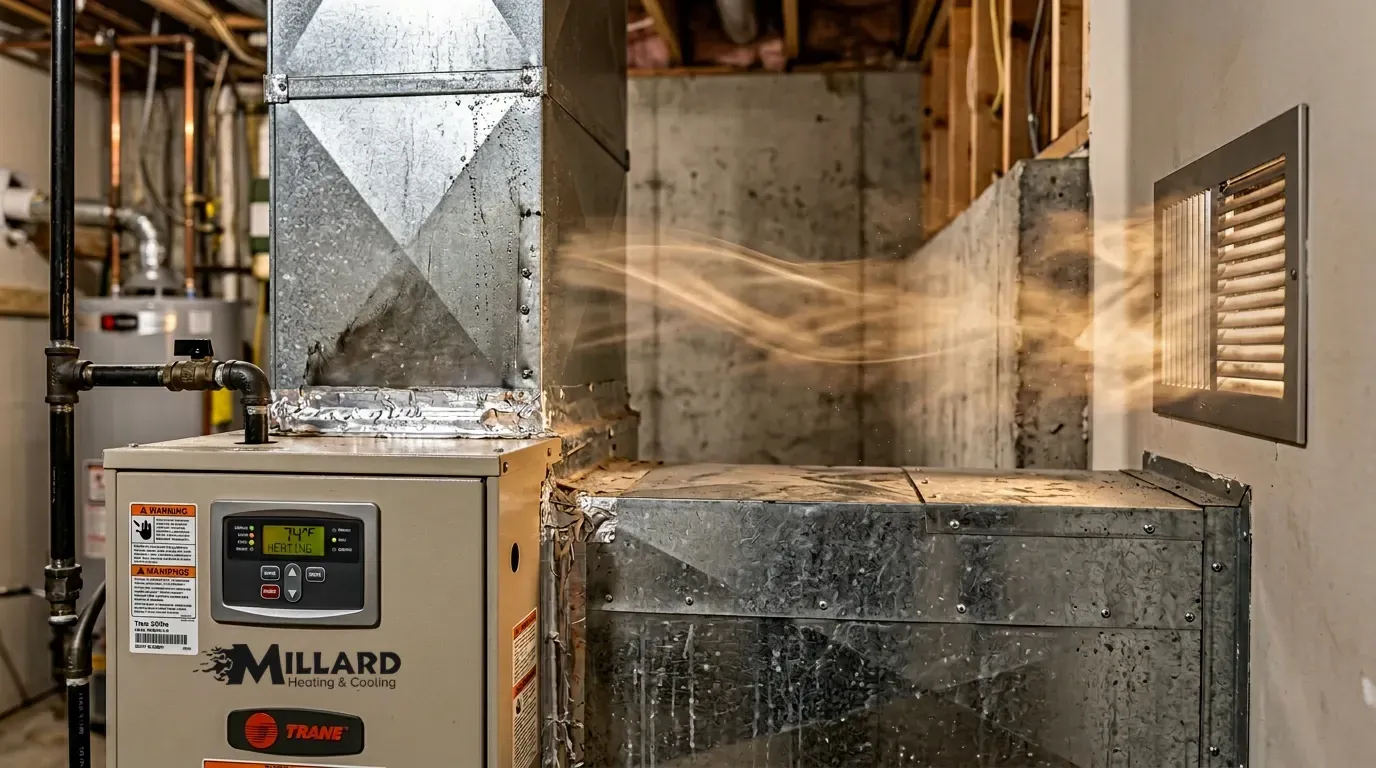
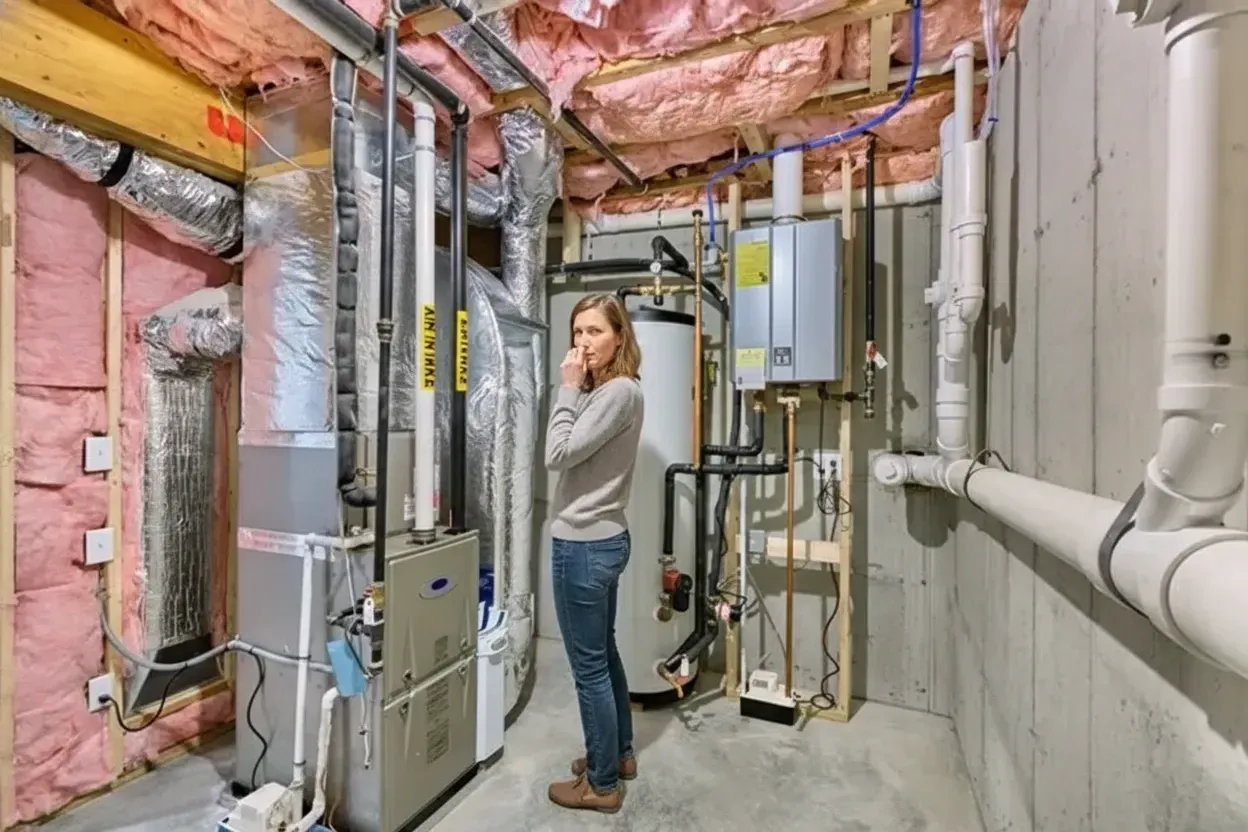
Often referred to as your heater or the heater, your furnace is what warms your home when it gets too cold. In Nebraska, the main way homes are heated is through burning natural gas, which heats up the air in your furnace and gets blown throughout your home or office. If you’ve recently purchased a furnace and notice unusual smells, be sure to consult yournew furnace smells guide.
Air Conditioner
Opposite of your furnace, your air conditioner is responsible for cooling the air inside your home and office. Like most air conditioners in cars and refrigerators, the system uses a refrigerant to cool. The indoor air passes through the refrigerant, gets colder, and that air is distributed to your home or office.
Condenser Unit
One of the most recognizable parts of an air conditioning system is the outdoor condenser unit. It's the large, cube-shaped unit outside your home or office that turns on whenever your air conditioner is running. Its job is to release heat from inside your home to the outside.
Evaporator Coil
The evaporator coil, also part of the air conditioning system, is located on the inside of the HVAC unit inside the home or office. It is what absorbs the heat inside. Air is blown through it; the refrigerant inside the coil removes the heat and humidity from the air, and the heat is transferred to the condenser unit, where it is blown outside.
AC Compressor
The compressor is in the condenser unit outside. It is what pressurises the refrigerant and circulates it between the condenser unit outside and your main HVAC system inside. It’s often referred to as the heart of the AC system. Like a heart, it is what moves the refrigerant (like blood in the veins) and, without it, no heat is moved outside, and no air is cooled inside.
Refrigerant
This is a liquid and gas often called “Freon”. Its job is to carry the heat from inside a home or office and transfer that heat to the outside of the home. This miracle compound cools the environment around it when it is warmed. Unless there is a leak in the air conditioning system, this compound never needs to be refilled.
Thermostat
This is the sensor in your home or office that detects when the indoor air temperature either gets too high or too low, depending on your settings. Often called the brain of your HVAC system, it’s what tells either your heater or air conditioning to turn on and for how long. Having multiple smart thermostats can help each area of your home or office stay at the right temperature.
Ductwork
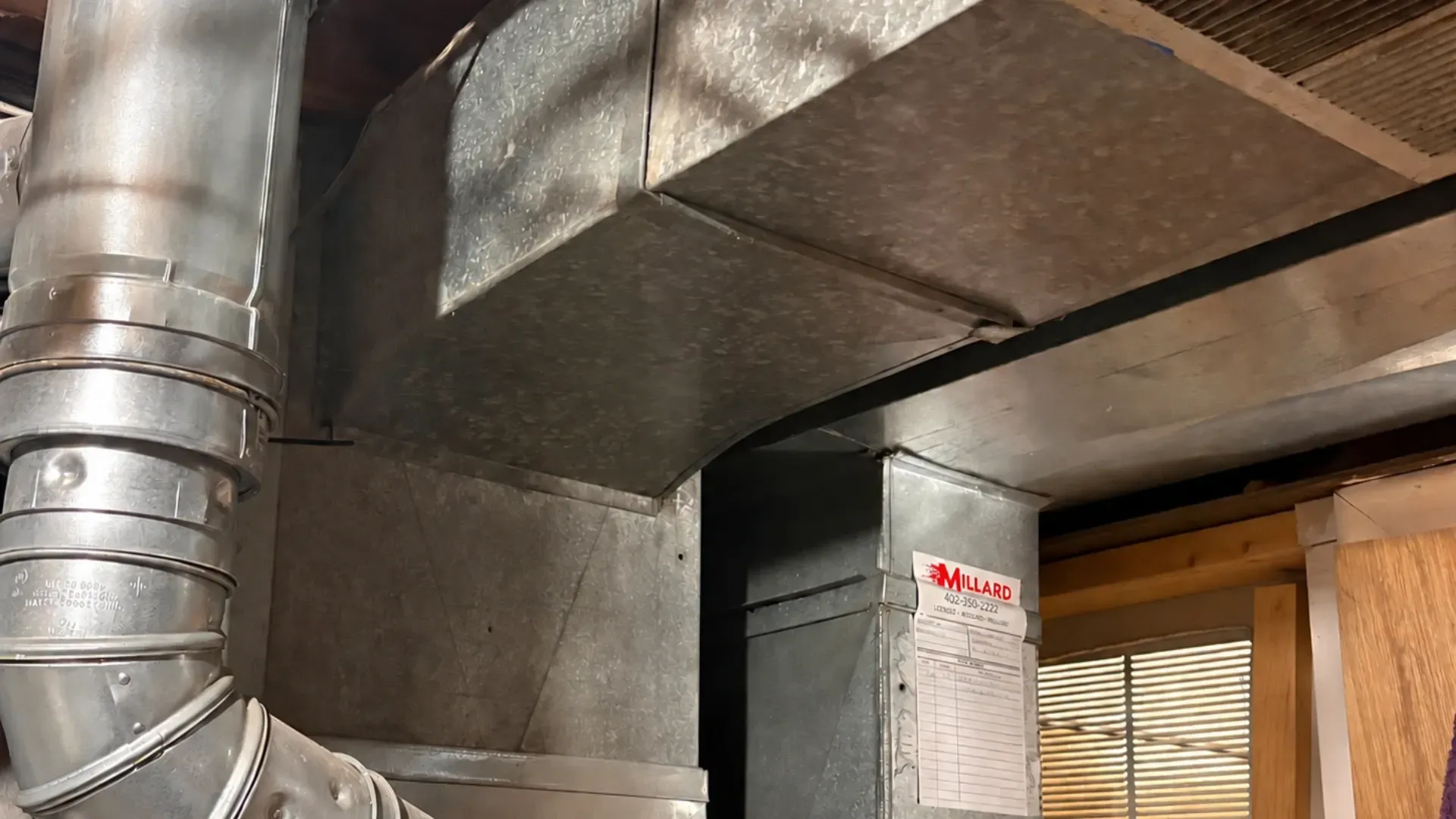
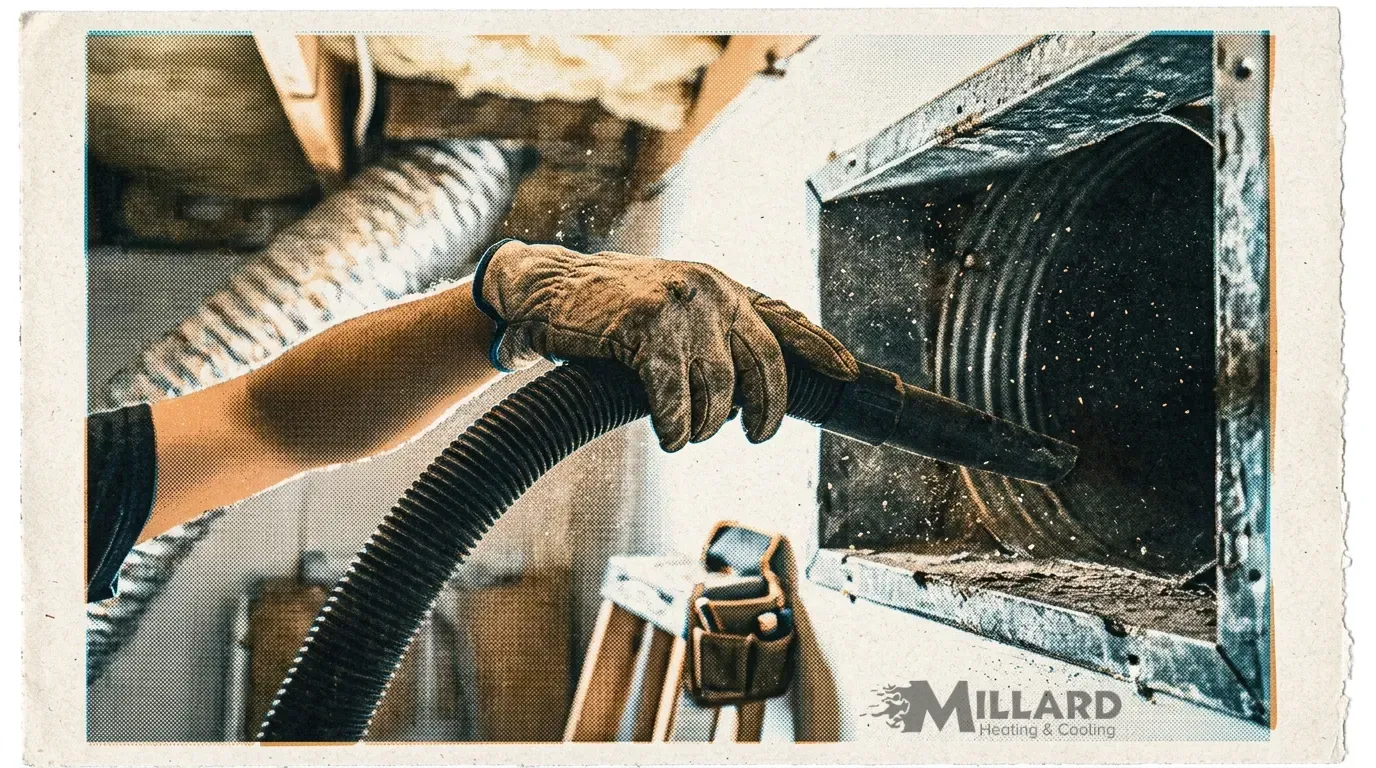
Ductwork, often called air ducts, is the enclosed space connected to your HVAC system where the air travels from the system to each room. Sometimes connected via duct tape (air duct, duct tape), these metal channels ensure that air is delivered to the HVAC system and from it to each room or office space.
Vents
Vents are where the ductwork ends and prevent larger objects from falling in. Vents are found on the floor, ceiling, and walls. Vents are simple in that they help direct the airflow into the room, can be closed, and come in various designs. They can be and are the stylish face of where the air enters the room.
Blower
Inside the HVAC unit is the main blower that pushes the heated or cooled air into every room. Just like most fans, it sucks air in from an air intake, through the air filter, and blows the air out. Without the blower, the heated or cooled air would sit around the HVAC unit.
Cycle
HVAC technicians use this term to mean everything that happens, or the sequence of events, from when the system turns on, heats or cools the air, pushes the air out, and then turns off. If it doesn’t run a complete cycle, that’s called a short cycle.
Types of HVAC Systems
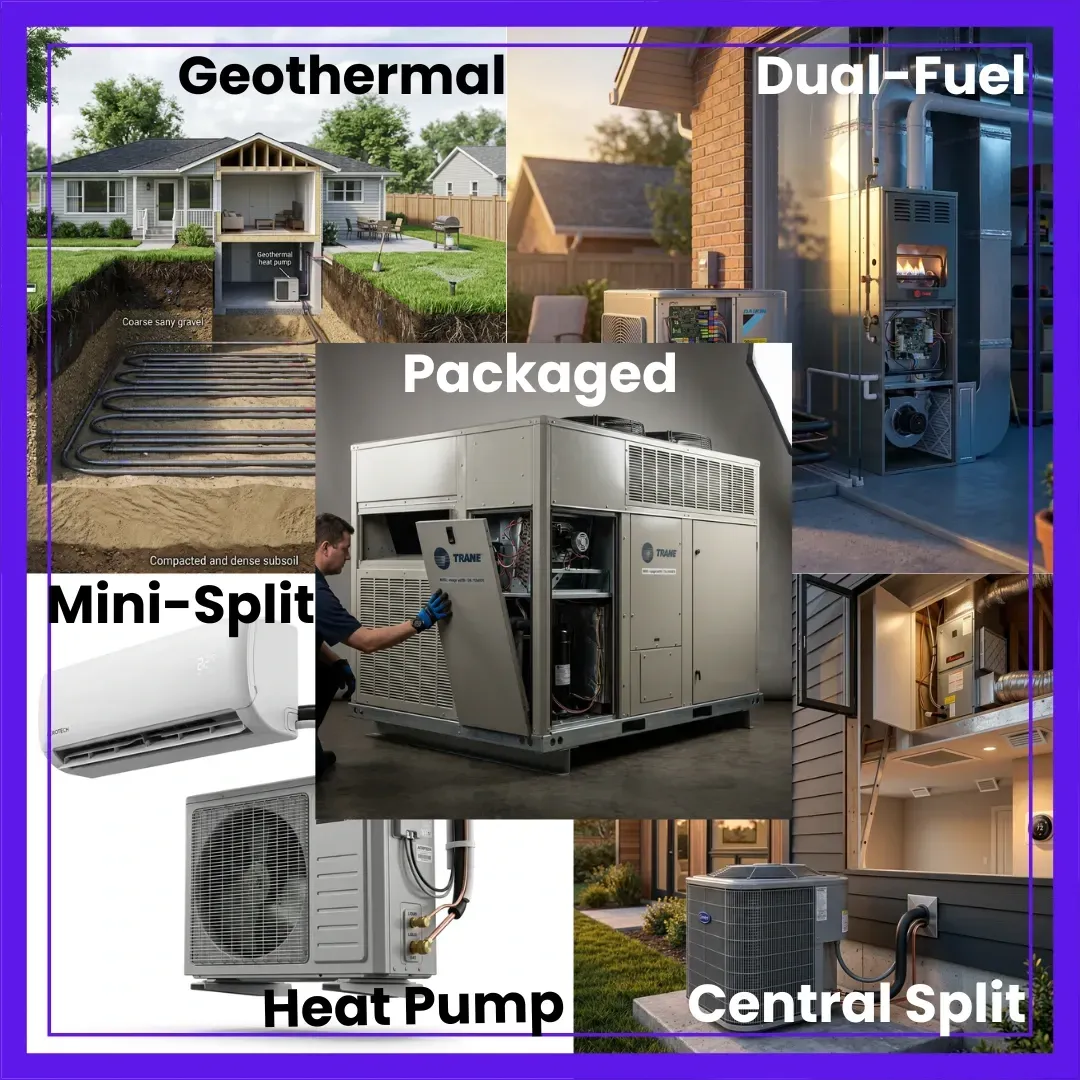
So, now that we know the basic components of an HVAC system, there are different configurations and setups of units that service different interior area sizes and ways to save space where it’s needed. Knowing which type you have can help you know what repairs, upgrades, or replacements may be needed.
Central Split System
In Omaha, this is the most popular system configuration. The outdoor condenser unit is the part of your air conditioning system that most people recognize. It contains the compressor and condenser coil, which work together to release heat from your home. The indoor HVAC unit, located inside your home, contains the furnace and evaporator coil. Together, these components heat your home and help cool the air during the summer. This system is what is used for central air. This system uses ductwork and vents.
Hybrid Or Dual-Fuel System
DThis system pairs a gas furnace with a heat pump. A heat pump is a system that moves the heat from outside to inside, and vice versa. A gas furnace in Omaha typically uses natural gas that it ignites, and the flames heat the air. Having a hybrid system is where the heat pump does the cooling and most of the heating if the temperature is moderate. However, when it gets extremely cold outside, that’s when the gas furnace turns on. It’s a good way to minimise utility bills.
Ductless Mini-Split
This unit is popular for small areas, like a garage or converted office space. The unit is a rectangular shape mounted on the wall and doesn’t require any air ducts. The unit blows air right into the room where it’s installed. Just like a central split system, it has an outdoor unit to export heat and is both a heater and an air conditioner.
Mini-Splits are not connected to the main HVAC system at all. Each wall unit runs independently, so it's good for spaces that don't need climate control all of the time or don't need to match the temperature in the rest of the home or office.
Packaged Unit
Unlike the prior units mentioned, the packaged unit is an all-in-one unit that is packaged together in one big unit. These are usually found on the roof or near a building’s foundation. When indoor office space is limited, these are a great option and only need ductwork and vents to deliver the climate-controlled air.
Heat Pumps
It can be part of the dual-fuel system or stand alone. The primary difference is moving heat rather than generating it, like with a furnace. The U.S. Department of Energy states that heat pumps are one of the most energy-efficient, but are most effective in moderate climates (not Omaha).
Geothermal
A system using a mix of electrical and natural elements. Pipe loops are buried underground, where the temperature stays relatively constant year-round. During the winter, the system pulls heat from the ground and transfers it into your home. As it gets hot outside, cooler underground temperatures help cool homes and offices. This system has a lot of upfront costs but doesn’t require burning gas and is more environmentally friendly.
Easy Maintenance and Warning Signs
This HVAC for dummies guide has gone over the basic parts and the different types of systems. Now, let’s dive into when to help out your HVAC system and when to call in a professional. As a note, unless some catastrophic weather event or physical damage from an internal source occurs, the majority of professional calls come from people who have not kept up with regular system maintenance. Here’s how to save money and prevent costly repairs.
Change Your Air Filter
If there’s one takeaway from this HVAC for dummies guide, it’s to change your air filter regularly. As the “A” in HVAC stands for “air”, your system will not function properly without airflow. Your air filter is intentionally placed in the airflow to prevent pollutants and particles from entering your HVAC system and causing damage.
The recommendation is to change it every 1-3 months. Failure to do so can causepoor indoor air quality and is usually part of the problem when we fix or repair HVAC systems in Omaha.
Keep Your Outdoor Unit Clean
Since your outdoor unit is exposed to the wonderful Nebraska elements, a lot of things can get into it, like leaves, sticks, snow, cut grass, mud, dust, and more. If next to where rainwater splashes, mud can get into the coil guard and prevent airflow. Debris will make the entire system work harder and wear out faster.
Schedule Regular HVAC Appointments
Scheduling HVAC maintenance each spring and fall helps ensure your system is ready for the heat of summer and the cold of an Omaha winter. Identifying minor issues early can help you avoid expensive repairs or unexpected breakdowns when you need your system most.
Blocked Vents
Vents are found at least once in every room, and their job is to cover the ductwork, as mentioned before. They deliver the air. So, if they’re blocked, the air won’t flow like it should, thus making the blower work harder than it’s designed to. Here are things to notice to figure out if you have a blocked vent:
- If rooms in the home or office aren’t the same temperature.
- Not enough air is blowing into the room
- You’re unable to find the vent covers
- Furniture is placed in front of vents
Things To Look Out For
While this HVAC for Dummies guide is not an exhaustive list, the following are definitely some things that you should listen to or watch out for:
- Unusual sounds like clicking, squeaking, tapping, or banging.
- Your HVAC system doesn’t run for more than a couple of minutes
- If your home has unusual smells, like something is burning, a chemical smell, or dust blowing through the vents
- The air isn’t getting hot or cold enough
- Your system is running for hours on end
- Your energy bills suddenly increase without you knowing why
Quick HVAC For Dummies Cheat Sheet
That was a lot of basic information for you to know. This is why we recommend referring back to this guide when you need it. However, if you need all of it at a glance, here is the condensed version below.
- HVAC stands for Heating, Ventilation, and Air Conditioning.
- Core parts of an HVAC system are the furnace, air conditioner, AC compressor, refrigerant, thermostat, ductwork, vents, blower, and cycle.s
- System types include central split, hybrid or dual-fuel, ductless mini-split, packaged, heat pumps, and geothermal.
- Basic Maintenance: Change your air filter, keep outdoor units clean, schedule regular HVAC appointments, and don't block vents.
- Warning Signs: Unusual sounds, short run times, odd smells, not cooling or heating enough, running for hours, or energy bills spike unexpectedly.
Why We Made This HVAC For Dummies Guide
At Millard Heating and Cooling, we’re here to help you in every way possible. We will respond to every call for our neighbors and friends who need an installation, replacement, or repair. However, we want you and yours to stay comfortable in your office or home. While we are here to run a business and make money, we want your system to run for the long haul and not break down during severe weather. Remember, a little maintenance goes a long way.
Don't forget to save this HVAC for Dummies guide so you know what’s going on when you need it. When you do need help,
contact Millard Heating and Cooling for all your HVAC needs..