
How to Know If I Have a Broken AC Unit
How do you know if you have a broken AC? Is there a way to figure out if your air conditioner just needs some minor servicing? Ask yourself these questions before it’s hot outside and your home is getting uncomfortably warm. To avoid being in a hotspot, our guide walks you through checks you can do now, explains what can cause your AC to break, and tells you exactly when it’s time to call our licensed HVAC professionals. Let’s get to it.
What Should I Do First If I Think I Have a Broken AC?
Instead of panicking and calling our professionals, try walking through this simple checklist first. Don’t get us wrong, we’d love to come and take a look at your air conditioner for you, but we also love to see you take care of it quickly if it’s a minor issue.
- Check your thermostat. We know this may sound obvious, but someone could accidentally bump into your thermostat, or your kids could play with it and change the settings. Perhaps the setting was changed to ‘heat’ instead of ‘cool’, or perhaps it was turned off altogether. Also, check if the batteries are dead, the thermostat isn’t responding, or the display is blank.
- Look at your electrical panel. See if any breakers have been tripped, in the middle position, or off. If the one labeled “HVAC system”, “Furnace”, “Air Conditioning”, or “Condenser”, switch it off and then on again. If you do this and the switch immediately switches off, you may have an electrical issue.
- Check your air filter. Nearly every time our clients tell us they have an issue like a suspected broken AC, we tell them to check their air filter. If it gets clogged up or hasn’t been cleaned or replaced in a while, this is probably the culprit. The buildup makes your air conditioning system work harder, use more energy, and can cause it to shut down or freeze up. The buildup can also cause you to feel like you’re
allergic to air conditioning. Unless it’s new, it’s a good idea to replace it.
- Inspect your outdoor unit. The condenser unit removes heat from inside your home and expels that heat into the outdoor air. If there is debris like leaves or grass, or if it's partially covered by furniture, it’ll have to work harder and possibly overheat.
- Make sure vents aren’t covered. It’s easy to forget when moving furniture, having kids, or buying a new rug to remember where your vents are. Depending on the age and type of home, those vents can be on the floor or walls. Make sure they’re not covered so the air can flow and not overwork your air conditioner.
These steps may seem too simple, but our HVAC technicians have been on calls where all they had to do was rinse off the outside of the condenser coils because mud from a heavy rainstorm splashed onto it. The homeowners could have carefully used a hose, taken a few minutes, and resolved the issue themselves.
Outdoor Warning Signs That You Have A Broken AC
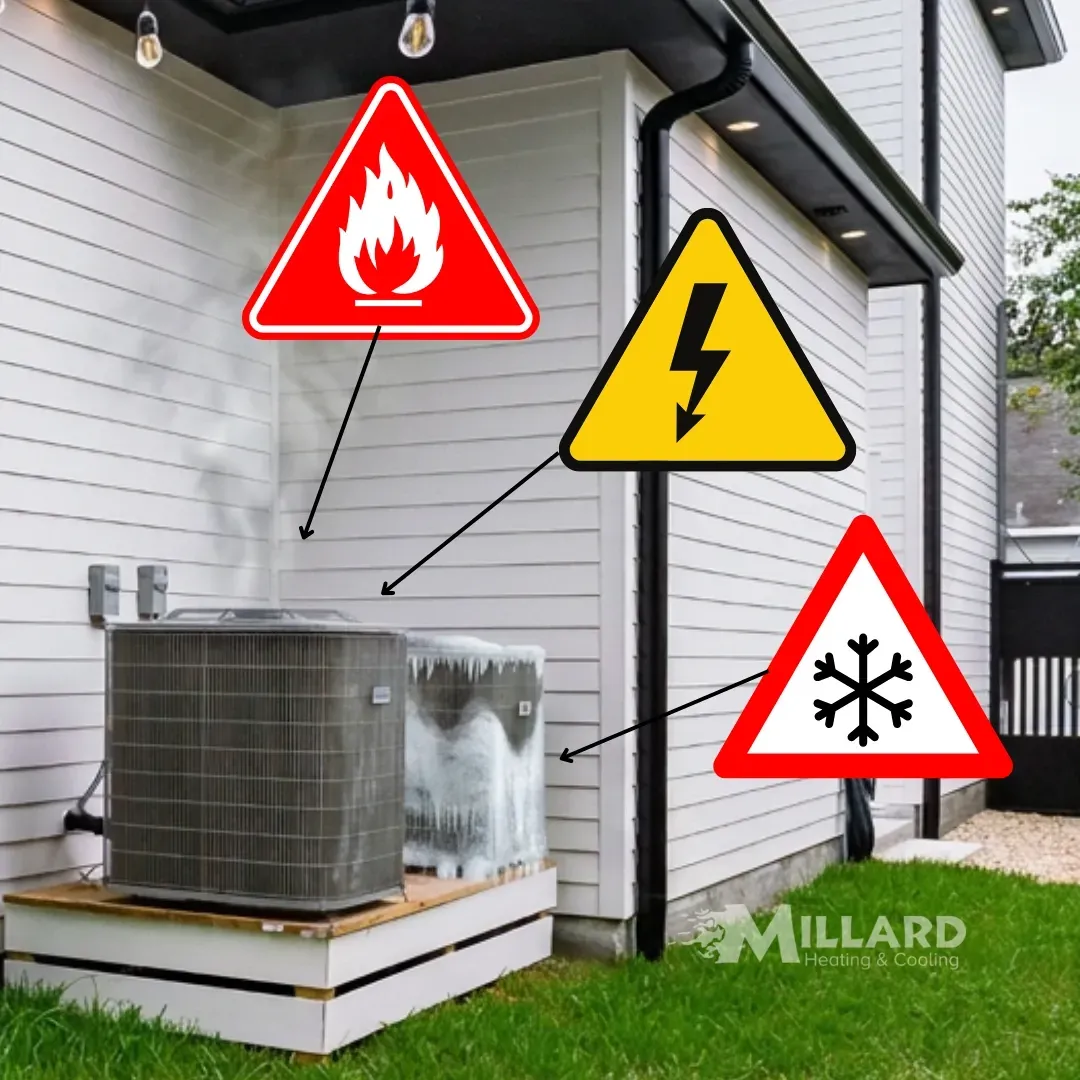
So, if you have a broken AC, what could have caused it? Well, we talked about four easy checks or fixes above, but those are more maintenance issues, not an actual broken AC. However, here is what can break in your air conditioner to prevent it from functioning, or parts that need to be fixed or replaced:
Frozen Evaporator Coil
If you see ice on your outdoor unit, something isn’t working properly. Ice can form for several reasons, so our technicians can inspect your system and check its different components to find the source of the problem.
Broken Capacitor
This component stores electrical energy and gives your outdoor air conditioner unit the extra power it needs to start running. The part will need to be replaced if it isn’t functioning properly. Signs that point to the capacitor having issues include hearing the hum of electricity in the outdoor unit, but the fan isn’t moving. Also, if the fuse in your home’s fuse box (also called an electrical panel or circuit breaker) keeps tripping or blows, this can also be a sign of a failed capacitor.
Low Refrigerant
A common phrase for people who suspect they have a broken AC is that they need to “recharge the system”. During normal air conditioning operations, the system doesn’t consume or burn refrigerant. The only way refrigerant isn’t reused is if there’s a leak. Patching the leak and properly returning your refrigerant levels needs to be done by an EPA-certified technician.
Indoor Issues Causing a Broken AC
We’ve talked about some possible issues occurring with the outdoor air conditioning unit, but what internal parts can cause a broken AC from working properly? Here are a couple of possibilities that need to be identified and fixed by a certified HVAC professional:
Blown Fuse
Your fuse box helps regulate how much electricity goes to different parts of the house. If there was an energy surge, natural or otherwise, the fuse will break to prevent frying your HVAC circuits. So, if it was blown, it’ll need to be replaced.
Faulty Thermostat
It’s possible that your thermostat could have been wired incorrectly, not connected to wifi if it’s a smart thermostat, or you could have the wrong model or type of thermostat for your HVAC system. So, it needs to be checked by a professional to ensure this is the case.
Low Refrigerant
A common phrase for people who suspect they have a broken AC is that they need to “recharge the system”. During normal air conditioning operations, the system doesn’t consume or burn refrigerant. The only way refrigerant isn’t reused is if there’s a leak. Patching the leak and properly returning your refrigerant levels needs to be done by an EPA-certified technician.
Clogged Drain Line
Did you know that while your air conditioner is running, it removes humidity from the air? Well, the condensed water needs to drain, and it does so through a hose or pipe called a drain line. If it is crimped, clogged, or stopped, your AC will shut off to prevent permanent damage to your unit.
Malfunctioning Blower
If you see and hear your outdoor air conditioning unit working properly and the thermostat is set, but you don’t feel any air blowing into your home, chances are your blower is either malfunctioning or broken. Causes can include faulty wiring, circuit board issues, or the motor in the blower itself is broken. Given all of these involve an electrical component, our HVAC technicians need to be the ones to inspect and fix this for you.
Should I Try To Fix My Broken AC Or Should I Call a Pro?
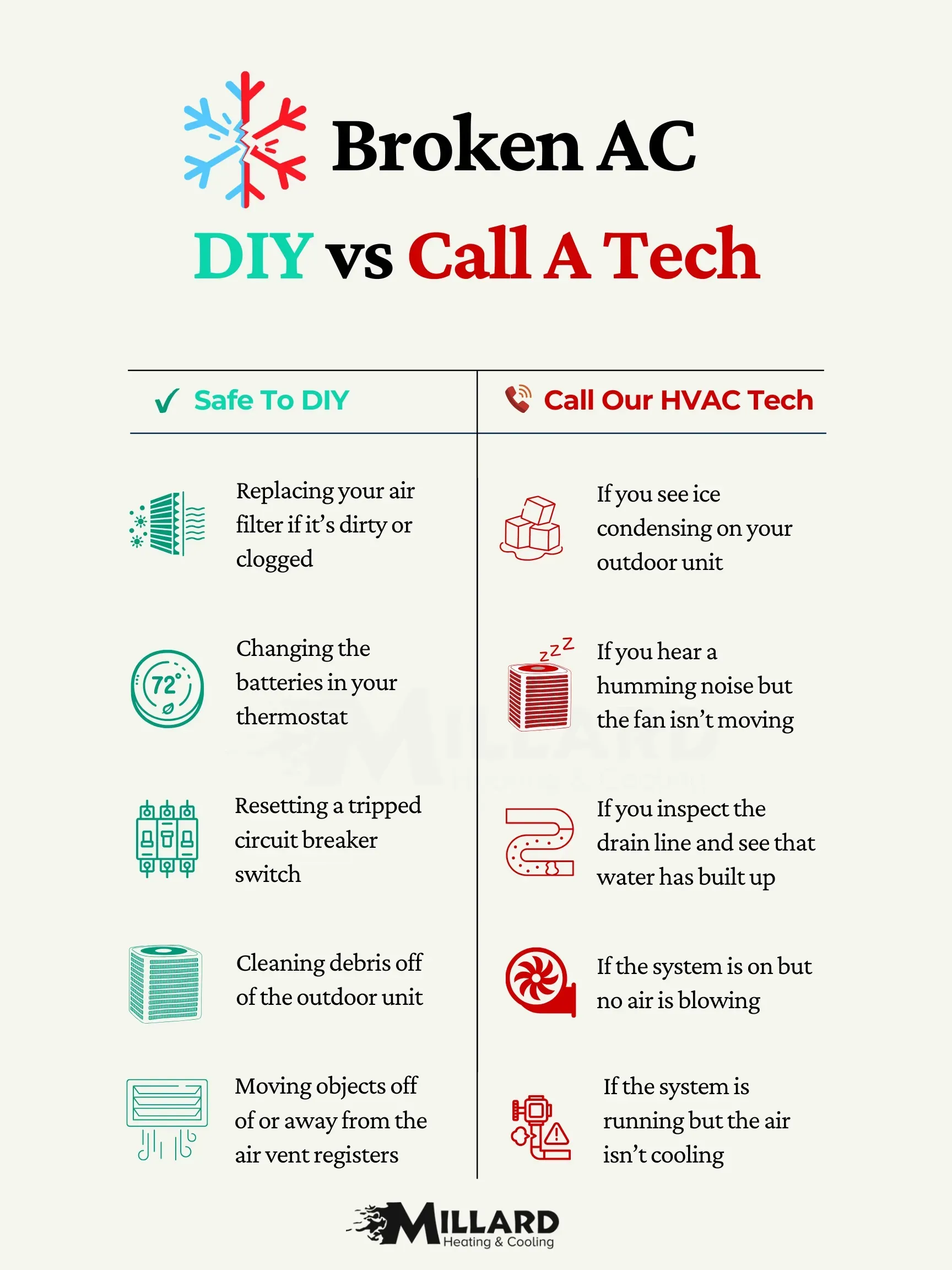
To help, we created the following infographic of what you can try to fix on your own and what you should leave to our HVAC technicians. Our goal is to help you
save money on air conditioning
by taking care of the simple issues, but also keep you safe by not attempting
repairs on your air conditioner that can cause more issues.
WHEN IT'S SAFE TO DIY
1. Replacing your air filter if it’s dirty or clogged.
2. Changing the batteries in your thermostat.
3. Resetting a tripped circuit breaker switch.
4. Cleaning debris off of the outdoor unit.
5. Moving objects off of or away from air vent registers
WHEN YOU NEED TO CALL OUR TECHS
1. When you see ice condensing (building) on your outdoor unit.
2. If you hear a humming noise but the fan isn’t moving.
3. If you inspect the drain line and see the water has built up or backed up.
4. If the system is on but no air is blowing.
5. If the system is running but the air isn’t cooling.
By no means is the list above an exhaustive list of all the possible DIYs or issues that our techs can encounter, but it’s a great starting point.
Still Stuck with a Broken AC?
If you’ve gone through our DIY list and you still have a broken AC,
contact our experts at Millard Heating & Cooling. We’re licensed, bonded, insured, and can get your air conditioner fixed or replaced quickly. We’re the locally owned and operated HVAC company based right in Elkhorn that’ll serve homeowners in the greater Omaha metro area.