
How Long Should A Furnace Run In Omaha?
A question that we get is,
“How long should a furnace run?” So, if you’ve wondered this, you're not alone. For a generic answer, a working furnace should run for about 10 to 15 minutes when it runs, and can run up to three times an hour. Making sure your furnace fits within those timeframes is good to know so that, if it tends to run drastically differently, it might be an indicator that something is wrong.
Other than keeping your furnace running, knowing the runtimes of a furnace can help you manage the comfort in your own home, what to expect with monthly bills, and the longevity of the system you currently have. We’ve put together this guide to help out further explain how long a furnace should run, what can affect the frequency, and when to know there might be a problem.
The Short Answer: What's Normal?
So, the average furnace in Nebraska should run anywhere from 10 to 15 minutes while running, and can run two to three times per hour. However, five key factors will change the frequency and runtime: outdoor temperatures, the insulation in your home, your air filter, where your thermostat is located, and how big your furnace is.
Just like most of us, furnaces don’t want to work harder than they have to. So, if there are problems with the furnace, the flames won’t ignite, or if it overheats, there are safety measures that trigger and cause the unit to turn off. After all, it’s better to be a little cold than to cause permanent damage.
Basics of A Furnace Cycle
So, before we go any further, let’s talk about what a furnace cycle actually is. A furnace cycle refers to your furnace starting up, heating, and turning off. Your thermostat sends a signal to your furnace when the temperature goes below the minimum you set. That signal tells the furnace to turn on, heat up, and blow that heated air into your home and office until it reaches the maximum temperature wanted. Once heated, the furnace turns off.
When the furnace is between cycles, it gives the system a chance to cool down and for the newly heated air to even out in the spaces it was delivered to. Also, think of your furnace like a car. If you were to drive your car at full speed nonstop, it would wear out a lot faster, causing costly repairs. Like a car, your furnace is a machine that needs to have breaks to not wear out.
Now that you know what a furnace cycle is, let’s get into those five main factors that affect furnace cycle frequencies and length.
Five Key Factors Affecting Furnace Run Times
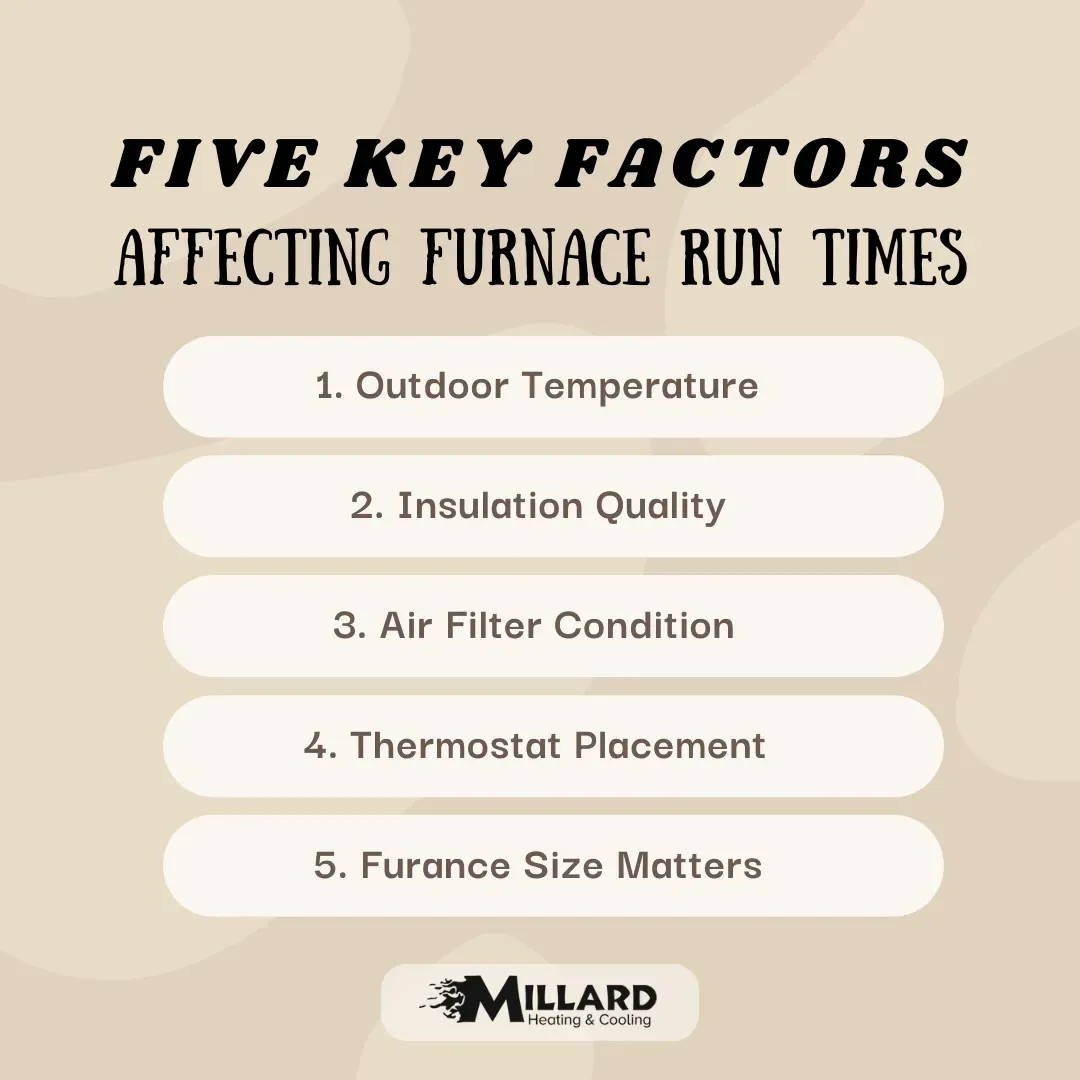
Now that we have the basic answer for “how long should a furnace run”, let’s talk about the five usual culprits that change those run times. Keep in mind, these aren’t the only five, but these are the most common.
A. Outdoor Temperature
During the spring and fall in Omaha, we get some interesting fluctuations in temperatures that can swing by up to 50 degrees in a 24-hour timeframe. Because of drastic changes and preferred temperature settings, those shifts can cause your furnace to work harder to keep the inside of your home or office comfortable.
Needless to say that, when it’s -30 degrees outside, your furnace may run longer. Just like your own body, it takes more energy to stay warm when it’s cold outside. It’s because warm air can escape through windows, doors, and walls.
B. Insulation Quality
Depending on the year your home or office building was built can affect how well insulated your walls are. As technology gets better, our ability as humans to find materials to prevent the transfer of heat through wall materials has improved. However, a small hole or crack can send that comfortable air leaking outside or allow cold air to seep inside.
Quick Tip: Because doors and windows are where most heat energy transfer occurs, check your windows and doors to see if you can feel air movement when your furnace isn’t running, and get those gaps sealed. You may also want to upgrade or replace your doors or windows if the materials are made of metal.
C. Air Filter Condition
We’re going to sound like a broken record, but you would be surprised how many furnaces we service that are caused or accelerated by people having dirty air filters. Think about it: if your furnace doesn’t get enough air through the filter, then it will have to work harder and longer to warm your home or office. It’s like trying to breathe with a thick mask on.
Also, dirty air filters are one of the leading factors in
poor indoor air quality. Please change your air filter every one to three months, or when it gets dirty. Both your furnace and your wallet will thank you.
Quick Tip: When shopping for air filters, get the ones that have about an inch between the pleats.
D. Thermostat Placement and Function
To get the most accurate reading of the air temperature in your home or office, your thermostat should be installed on an interior wall. The thermostat should not be above a vent, next to a window, in a kitchen, bathroom, or any area that would produce heat.
If not in the right spot, your home or office will know that the area it’s located in is nice and warm, but your family or coworkers could be freezing and wrapped up tightly in blankets and coats.
Quick Tip: Check the batteries in your thermostat every three months. Also, consider having an HVAC unit where multiple thermostats can help with zone heating to keep the entire home or office evenly heated.
E. Furnace Sizes Matters
If your furnace is too small for your space, it’ll be overworked, the furnace cycles will last forever, and your unit will literally burn out quickly. Transversely, if the furnace in your home or office is way bigger than needed, the air will be heated too quickly and not finish a regular cycle (this is called a short cycle). Having your furnace too big or too small results in not running the way they were made to run and ultimately will cost more in repairs.
Quick Tip: The furnace you need depends on the climate zone, square footage, and insulation quality.
Common Causes of Irregular Cycles
So, now that we know how long a normal run time for your furnace is, what a furnace cycle is, and the five key factors that affect run times, let’s talk about irregular cycles. There are a lot of reasons why a furnace can malfunction or not run cycles properly. Here are some common causes why your furnace may malfunction and not run proper cycles:
1. Failure To Ignite
Most homes and businesses in Omaha run on natural gas. As a quick lesson, the gas comes into the home through a pipe, gets fed into the system, burns, and the heat generated warms the air that gets blown into the spaces to heat. As with any fire, the three elements that are needed are air, fuel, and ignition.
Gas furnaces ignite either from a spark or a metal heated extremely hot to cause the gas to combust. If your igniter isn’t receiving the right signal from the motherboard, the gap in the igniter is too big, or if somehow it was disconnected, the gas will automatically turn off, and your furnace will short-cycle and blow cold air.
2. Lack of Electrical Supply
Even though the furnace uses gas to burn and warm the air, the entire process is controlled by a motherboard that connects to all sorts of sensors in your HVAC unit. If there’s too much gas during the cycle, the motherboard will shut the entire furnace off to prevent a buildup that could cause an explosion.
As a safety measure, if the motherboard isn’t getting the electricity it needs to run properly, your furnace will not cycle. So, if it’s getting colder and you haven’t heard the furnace turn on, check the circuit board and the power switch on your furnace to ensure both are turned on.
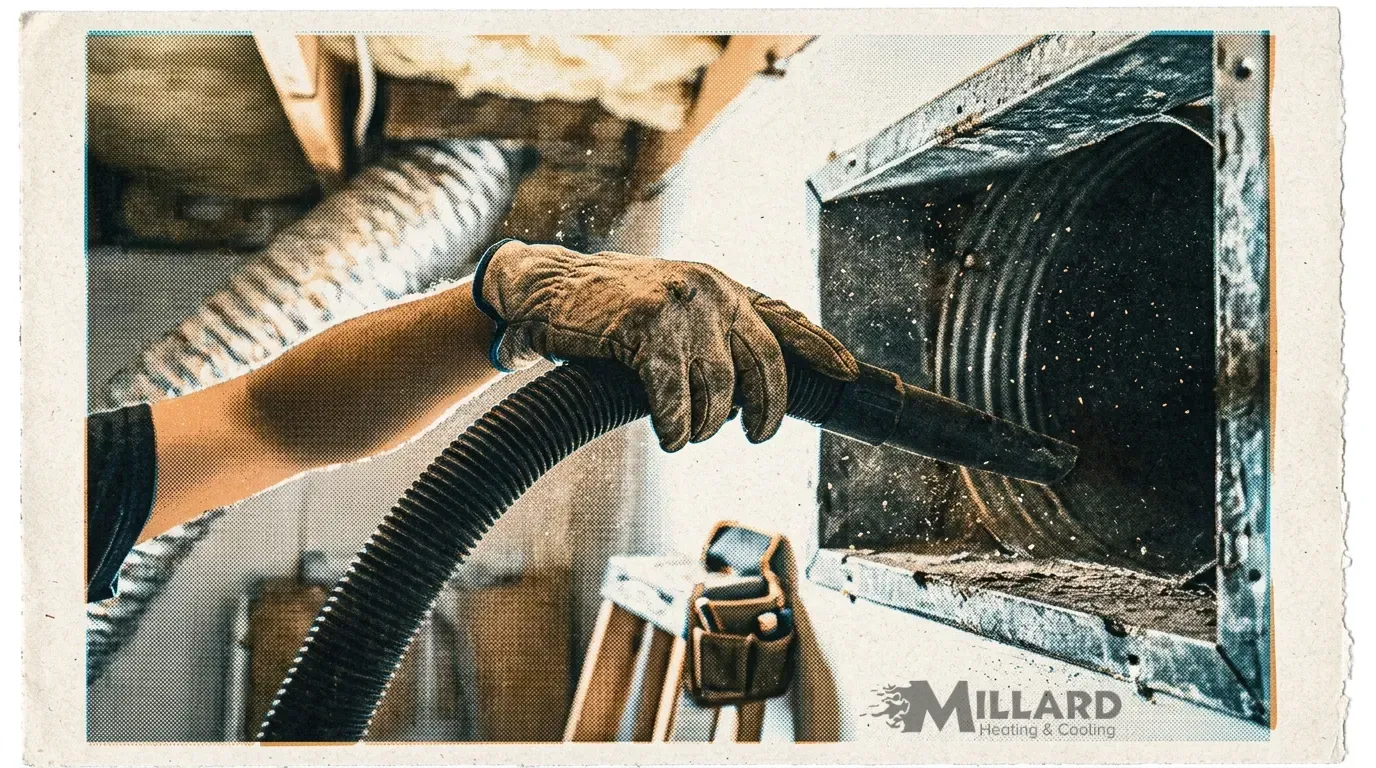
3. Debris In The Ducts
Whether it’s a malfunction of the furnace itself or someone has put objects in your ductwork, having objects in there can cause many issues. If the items are in the intake, they can get into the furnace, block airflow, and combust.
If items are near the vents (kids love putting toys and random objects in the vents), then those items can melt or burn and cause bad odors in the home. Also, a large buildup of debris can cause the furnace to work harder to warm the air. To prevent this,
you should clean your air ducts often.
4. Thermostat Malfunction
A properly functioning furnace will only run on the information that is given to it by the thermostat. If the bimetallic strips or mercury-filled glass bulbs in older thermostats have become worn out or broken, then they can’t read the temperature properly
For newer thermostats, if the power to them has been disrupted, a virus has caused the electronics to malfunction, or if it was damaged by water, then the computer inside will not produce accurate signals to the furnace.
5. Dirty Air Filters
Seriously, change your air filters. Keep them clean.
So, How Long Should A Furance Run?
A normal Omaha furnace should run two to three times an hour, with each cycle lasting up to fifteen minutes. These cycles can be irregular due to dirty air filters, thermostat malfunctions, debris, electrical supply problems, or an ignition failure. Common reasons for furnaces to run shorter or longer are due to the size of the furnace, where the thermostat is, the quality of the insulation, outdoor temperatures, and the air filter.
After serving Omaha for over two decades, we’ve seen all the above and much more. While regular maintenance can prevent or delay many issues, eventually furnaces need the care of expert furnace repair technicians. If you need a furnace fixed, replaced, or maintained, Millard Heating & Cooling is here to help you. Contact us today!